How Thick Should Your Drywall Be? Choosing the Right Gypsum Board for Hospitals
October 30, 2025

Overview
- Selecting the right drywall thickness in hospitals is essential for safety, compliance, and long-term wall performance.
- Properly specified gypsum boards balance fire resistance, acoustic control, and impact durability to meet the unique demands of key areas such as patient rooms, high-traffic areas, and specialized spaces.
- Choosing the appropriate drywall ensures reliable, compliant, and durable hospital walls that support both operational efficiency and patient comfort.
Selecting the appropriate drywall thickness in hospitals is more than a design choice—it affects compliance, safety, and long-term reliability. Walls must meet strict requirements while supporting the operational needs of healthcare spaces.
With thoughtful evaluation of board specifications, you can anticipate how walls perform under different hospital conditions, ensuring they support staff workflow, patient care areas, and specialized functions such as critical care or imaging rooms.
This article focuses on choosing the right gypsum board for hospitals, presenting factors and considerations relevant to material specification and project planning in healthcare settings.
Why Drywall Thickness Matters in Hospitals
Drywall thickness affects measurable performance criteria that matter in healthcare environments. In practice, those criteria — fire resistance, acoustic isolation, and structural resilience — translate into outcomes you evaluate when specifying wall systems for different hospital zones. Understanding how thickness changes these outcomes helps clarify trade-offs between compliance, operational continuity, and lifecycle costs.
Different thicknesses alter how assemblies behave under stress: thicker boards commonly improve fire rating and impact resistance, while combinations of board and cavity treatments influence acoustic performance. In your role, viewing thickness as one variable among many (finish, cavity design, insulation, and fixtures) makes it easier to compare assemblies against project requirements and regulatory benchmarks.
Longer-term concerns also tie back to thickness choices. Boards that better resist damage and maintain acoustic separation can reduce repair cycles and limit disruptions to clinical operations — factors that affect maintenance planning, budgeting, and the facility’s ability to remain fully operational during retrofits or repairs.
Key Considerations for Hospital Drywall Thickness
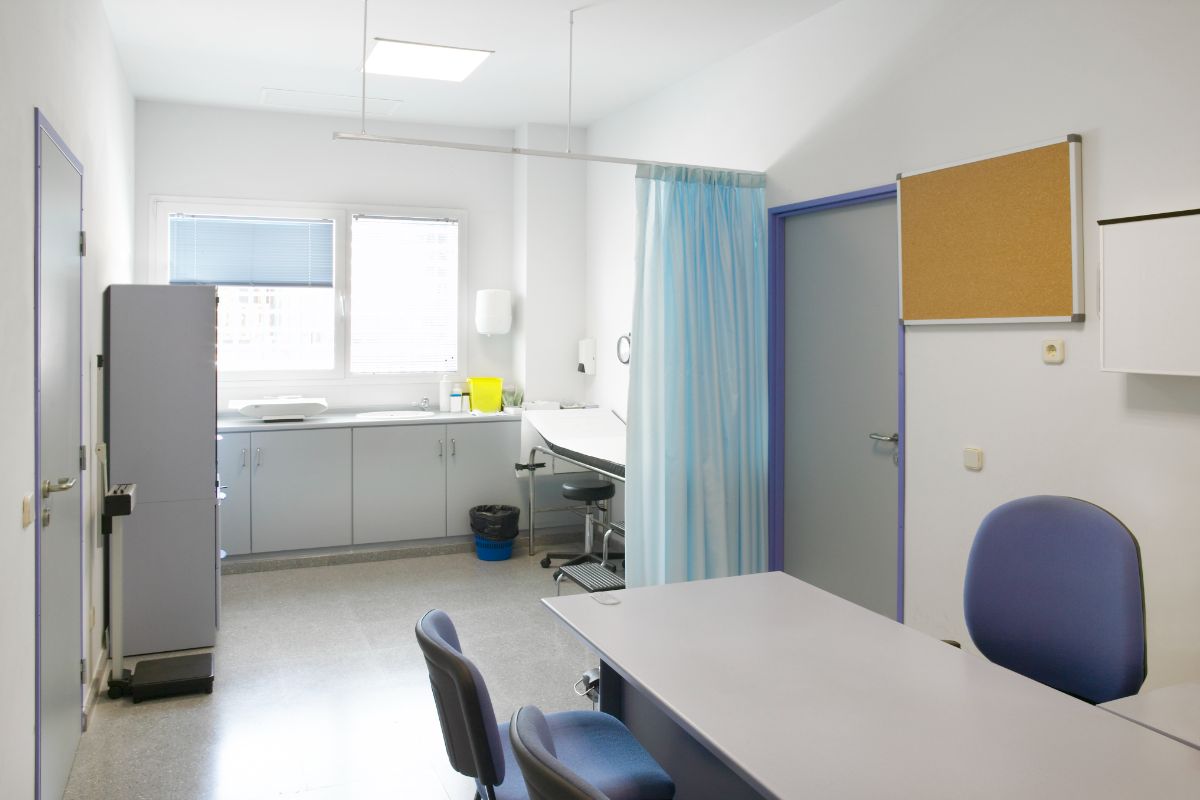
Choosing an appropriate thickness for your gypsum board involves balancing multiple technical and operational considerations. For hospital engineers, these considerations are evaluated in the context of safety standards, patient experience, and the practical demands of daily facility use.
Fire Resistance
Fire-rated assemblies often rely on specific board types and thicknesses to meet hourly rating requirements. When reviewing specifications, you will compare tested assemblies and ratings rather than relying on thickness alone — thicker boards can help achieve higher ratings, but the complete wall build-up (stud spacing, insulation, joint treatment) determines compliance.
Sound Control
Acoustic performance is driven by both board mass and assembly composition. Thickness contributes to sound transmission class (STC) values, but you will typically assess options by looking at assembly test data and how the wall interfaces with doors, ceilings, and penetrations that affect real-world privacy and noise control.
Impact Resistance
High-traffic areas require assemblies that tolerate knocks, carts, and mounted equipment. Thicker boards increase resistance to dents and punctures, but finish type, backing, and protective features (corner guards, reinforcement) also factor into how long walls remain serviceable before repair.
Examples of Drywall Applications in Hospitals

Different hospital spaces present distinct demands that influence how thickness choices are weighed. Framing these examples in operational terms clarifies why certain thicknesses or assemblies may be more appropriate for one area than another.
Patient Rooms
Patient rooms prioritize acoustic privacy and a durable finish that resists routine wear. Here, thickness contributes to acoustic separation, but you will look at how the wall assembly manages penetrations, seals around doors, and integration with bedside equipment to ensure both comfort and functionality.
High-Traffic Areas
Corridors, loading zones, and equipment rooms face repeated impacts and abrasion. Thicker boards can reduce repair frequency in these locations; at the same time, you will consider protective strategies (reinforced bases, protective rails) and how quickly walls can be repaired without disrupting operations.
X-Ray Rooms
X-ray and other imaging rooms require special treatment for shielding and serviceability. While radiation protection depends on shielding materials, board thickness remains part of the structural and fire-safety picture; you will assess how the chosen board integrates with shielding layers and supports wall-mounted equipment and maintenance access.
Find the Right Gypsum Board Solutions With Excelcon
Hospital projects often demand reliable, high-quality materials that balance fire resistance, sound control, and durability. At Excelcon, we offer gypsum boards in standard 4’x8’ sizes with thicknesses of 9mm, 12mm, and 16mm, providing options that can suit a variety of hospital wall requirements.
We prioritize consistent quality, adaptable specifications, and practical performance, supporting considerations for fire safety, acoustic management, and long-term durability. These features make our gypsum boards a viable solution for healthcare construction projects that require materials that engineers can evaluate with confidence.
Key Takeaway
With a clear guide on how to go about choosing the right gypsum board for hospitals, you can ensure that you select and install the ideal drywall for your specific needs.
If you need guidance selecting the right gypsum board for hospital projects, our team at Excelcon is ready to help. We provide high-quality drywall options engineered for durability, hygiene, and safety in demanding healthcare environments. Contact us today to learn more!
Recent Posts

What Buyers Should Verify Before Finalizing a Metal Furring Order
What should buyers verify before finalizing a metal furring order? Technical specifications Design and site conditions Supplier and logistics Compliance Overview Finalizing a metal furring order is crucial for maintaining a project schedule and meeting quality standards, but overlooking technical specifications, measurements, or delivery logistics can lead to installation issues and increased costs. Before ordering, […]

Key Factors to Consider When Buying Metal Furring for Your Office
What are the key factors to consider when buying metal furring for your office? Material specifications Structural and performance requirements Function within the office Cost and logistics Overview Choosing metal furring for an office requires careful evaluation beyond product labels, as material differences in gauge, coating, and compatibility affect installation efficiency and long-term reliability. Key […]
4 Common Mistakes to Avoid When Choosing Gypsum Boards for Medical Facilities
What are the common mistakes to avoid when choosing gypsum boards for your medical facilities? Using standard boards in wet areas Misinstalling fire-rated assemblies Choosing weak boards for high-traffic zones Neglecting workmanship and compliance Overview Choosing the right gypsum boards for medical facilities requires careful evaluation of factors like moisture resistance, acoustic performance, and fire […]

6 Factors Warehouse Developers Must Weigh When Choosing Ficem Boards
What are the factors warehouse developers must weigh when choosing Ficem boards? Application and location Technical specifications Performance features Cost and installation Aesthetics and design Quality and brand reputation Overview Warehouse projects require Ficem boards that withstand heavy use, moisture, and varying conditions while maintaining safety and operational efficiency. Evaluating application, technical specifications, performance features, […]